A Postcard From Costa Rica
For as long as I can remember, my spring breaks have been spent tucked away in bed reading. I used to loathe the staycation, but in reality, I cherish the breaks I’ve spent binge-reading, writing, and spending time at my favorite coffee shops. This is the first spring break in around 6 years that I’ve done something new. This spring break, I spent 10 days in Costa Rica for a study abroad course on soils, crops, and natural resources.
In case you don’t know, at the time of writing this, I’m a senior in college studying chemistry and environmental studies, and I have been hoping to study abroad ever since I came to college. I was signed up for a global leadership course in the Bahamas last year, but sadly I got a nasty concussion a week before the trip left so I was unable to attend. With that being said, I was a little nervous to try again, worried that something else would go wrong, but when I saw a trip going to Costa Rica to study environmental issues I applied and committed to the program before I could really think about it.
I have been ecstatic to plan a trip to Costa Rica in particular since discussing the Paris Climate Accord in my Energy and the Environment course. I deeply admire Costa Rica’s commitment and active plan to achieve zero net emissions by 2050. So, I knew I couldn’t pass up the chance to explore and immerse myself in the country. And that’s the story of why I got on a bus at 1:30 AM to drive to the airport and fly out of the country for the second time in my life.
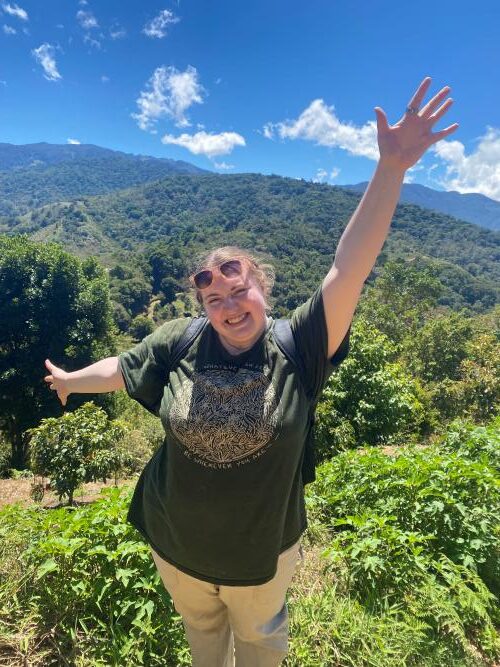
My Top Tips
 always wear sunscreen
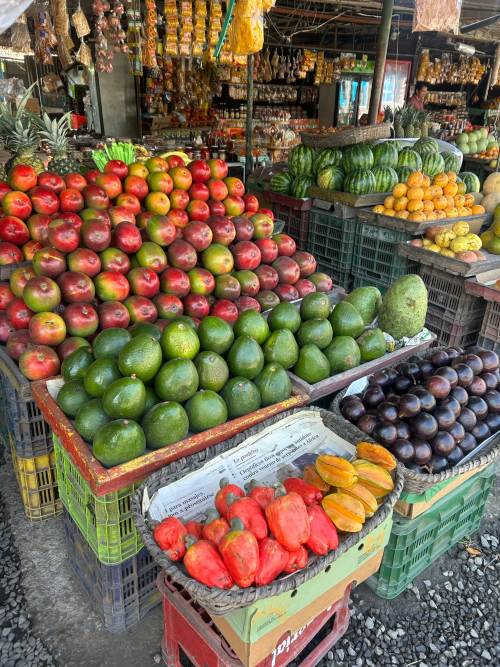 try a fresh fruit smoothie
 embrace embarrassment
WHAT DID WE ACTUALLY DO?
Let me break it down for you. The name of the course I participated in was “Soils, Crops, and Natural Resources of Costa Rica” through the agronomy department at my university. Therefore, the central focus of our trip was traveling around the country to tour different farms and processing plants, learning how they grow and produce crops within their specific environmental conditions and cultural contexts.

You may ask, what types of places did we visit? Well, we made pit stops at a:
- Pineapple farm and processing plant
- Organic vegetable farm in the mountain side
- Coffee cooperative where they grew, processed, and roasted coffee beans
- An expansive farm in the highlands with plenty of animals, crops, and herbs
- Bamboo farm
- Palm oil plantation that was also a spice farm (aka they grew several spices/seasonings)
- Rice Farm
- Sugarcane processing facility
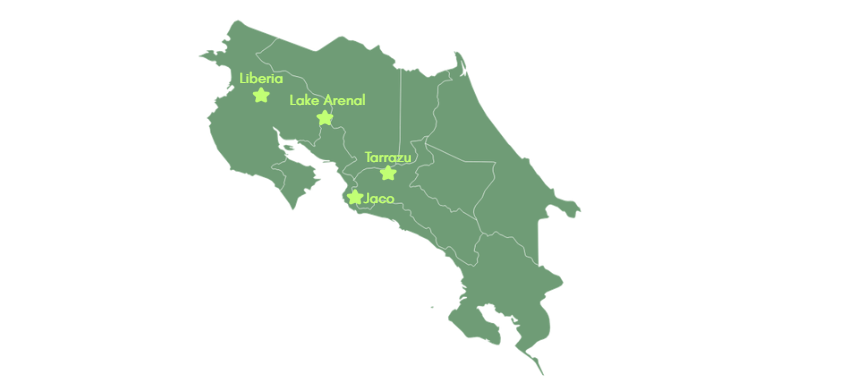
During our adventures, we had a semi-regular routine: wake up at the butt crack of dawn, I’d chug a quick cup of black coffee, and then we’d grab all our stuff and hop on the bus, which was our homebase for the rest of the day. Since we were traveling so much across the country, we were staying at a new hotel almost every night (which was a little exhausting, I will admit). Getting to see the country by bus was both a blessing and a curse because while the views were astonishing, if you get car sick (like moi), it proved a little tricky at times.
My top three highlights of the trip were the spice farm, the coffee cooperative, and the day we spent at the beach.
The Spice Farm
The main crop this farm produces is palm oil, the oil from the reddish-brown fruit shown in a picture below. This oil is essentially a vegetable oil used in many food products. However, the spice farm had a multitude of other crops, including pepper, coffee, turmeric, cinnamon, vanilla, and cacao (kuh-kau).
For those of you who don’t know, chocolate originates from cacao pods from cacao trees. At the spice farm, we got to pick cacao pods and see the beans inside, covered in the slime-like pulp with a sour, tangy, citrusy taste. These beans are collected, washed, and fermented before they are roasted to form cocoa nibs. The cocoa nibs can be ground and melted, mixed with sweeteners and cream to form the chocolate we know and love.
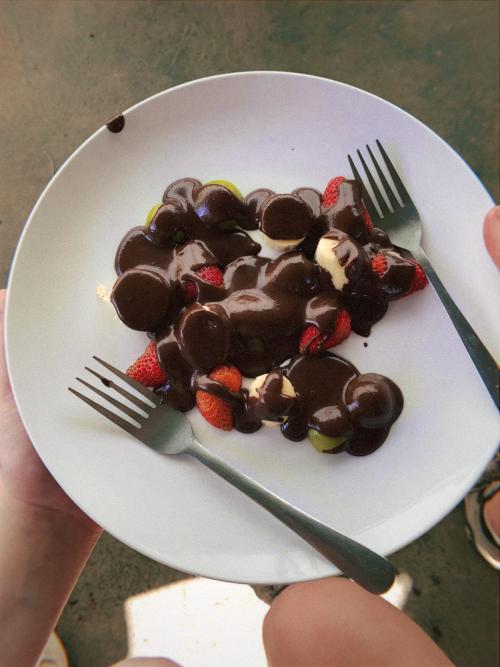
If you’re a dark chocolate fan like me, I beg you to try cocoa nibs with some strawberries; the pairing is divine. At the spice farm, they made us a fresh chocolate mixture that they poured over a plate of fruit (yum yum). This is also where I got most of my souvenirs because I bought a bunch of spices and vanilla extract (sue me).
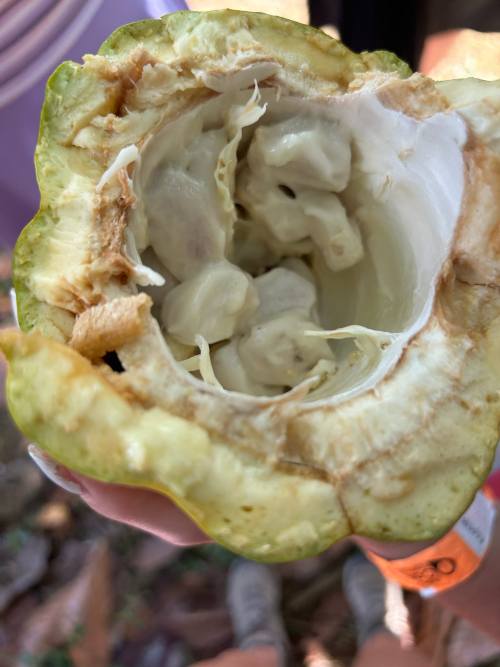 The inside of a cacao pod
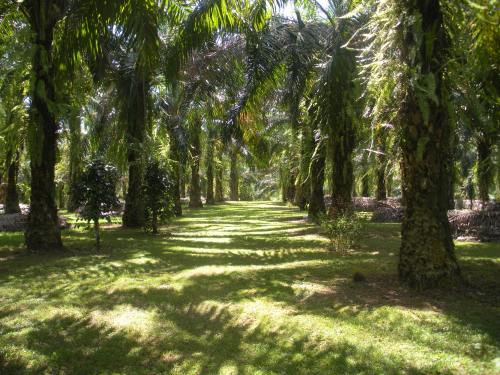 A view of the palm oil trees
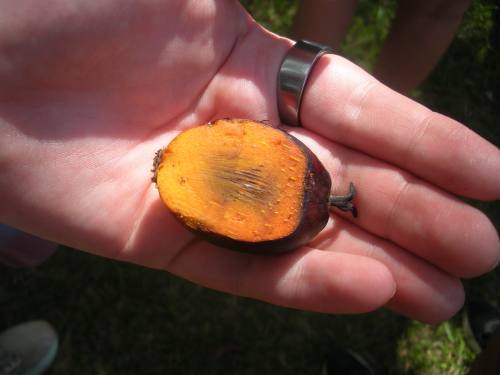 A cross-section of the fruit that produces palm oil
COFFEE COOPERATIVE
I love coffee. That has never been a secret. Needless to say, when my professor turned me loose in a field of coffee beans, I frolicked like no other and skipped around to pick some coffee beans for myself. And when we attended a local coffee fair where all the small coffee farmers came to sell their products, I lost a little more money (oops).
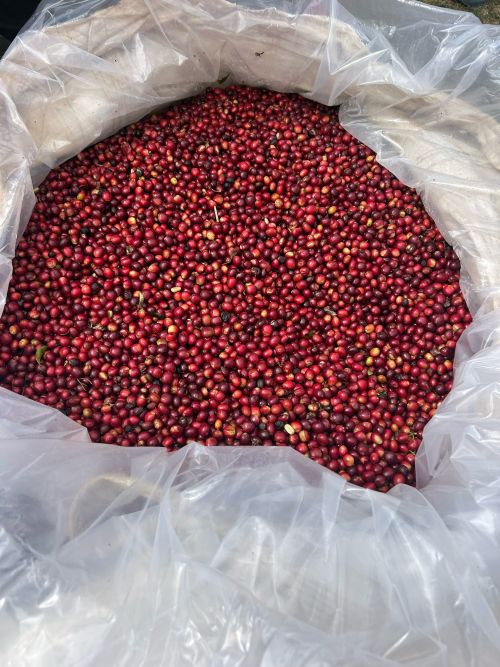
Coffee Facts
Coffee straight from the vine is referred to as a ‘cherry.’ This is due to the red membrane cover/skin. The cherry contains the coffee beans covered in a honey-like and honey-tasting pulp. Often, when coffee beans are processed, the honey and pulp are removed, but some coffee mills prefer to keep them on longer before roasting the beans to create a sweeter-tasting honey-coffee.
All coffee exported to the United States from Costa Rica is green coffee. This means that the coffee beans have been stripped of their membranes and pulp, dried, but not roasted. Unroasted coffee beans have a longer shelf life than roasted beans. For this reason, Costa Rica sends green coffee to the US for us to roast in-country.
All in all, Costa Rica taught me more about coffee. And how to take shots of hot black coffee in 90-degree heat.
JAco Beach
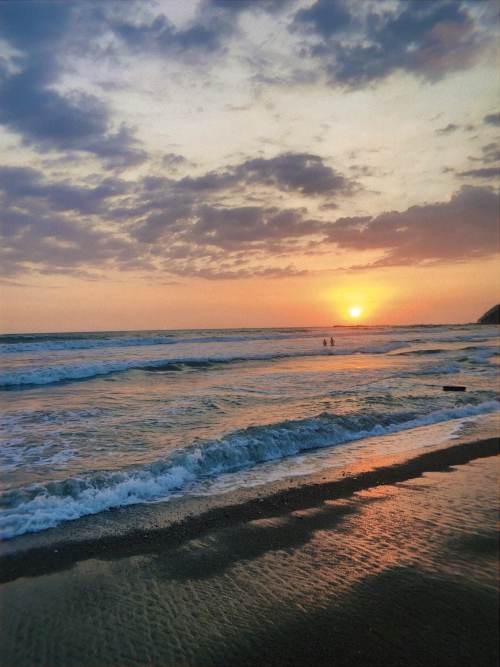
Built into our schedule was one day off at the beach in Jaco. After having my butt glued to my seat on the bus, the fresh air of the coast made me feel alive. Fun fact about me: I am oddly obsessed with water. Like, I am in love with lakes, rivers, rain, puddles, and oceans (it’s kind of why I hope to work in water-quality research). If you took my phone and looked at all my pictures from Costa Rica, 75% of them are bodies of water.
The sunsets on the beach were like no other. The coast and the picturesque hillside and cliffside looked straight out of my Pinterest feed. Beach days rock. Enough said.
PArting Thoughts
There is no doubt that Costa Rica is a lush and beautiful country, and I am eternally grateful for the opportunity to visit this spring. As someone based in the Midwest, it was enlightening to explore agriculture in a new context and see how, despite different landscapes and cultures, we have similar practices.
As someone who is a big homebody, this trip definitely pushed me outside of my comfort zone, but in a way that sparked me to grow. After this experience, I am interested and encourage you to learn more about where our food and water come from, and how our products are made. It is important to understand what you are consuming and why. I’m embarrassed to say this rarely crosses my mind at the grocery store, but I want to make an effort to pay more attention moving forward.
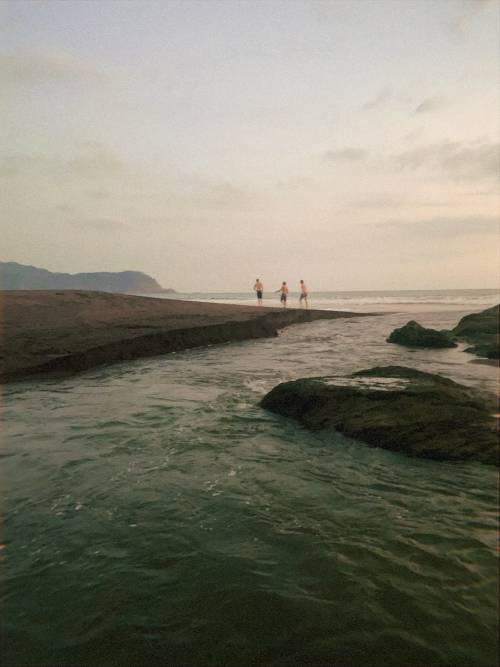 People watching at the beach
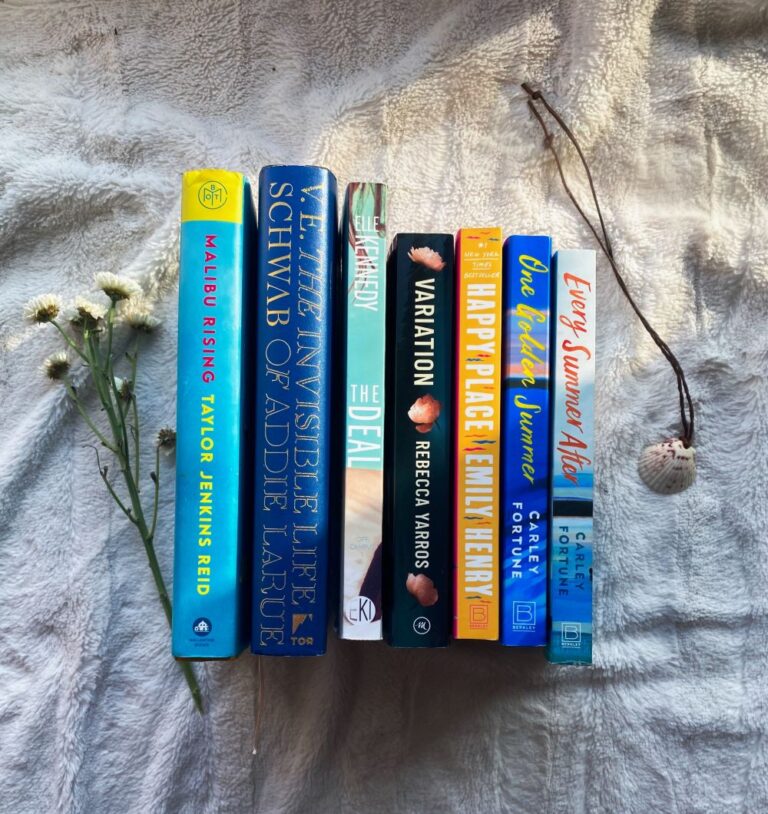
 Me binge reading Shield of Sparrows
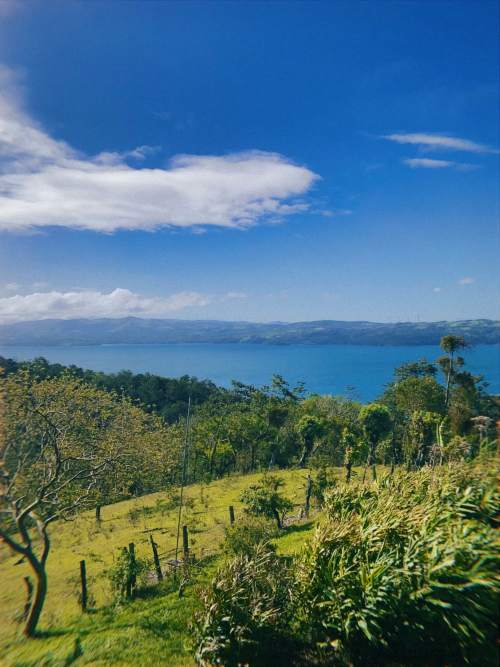 An outlook of the manmade Lake Arenal
I hope you enjoyed my mini Costa Rica recap and that I didn’t put you to sleep. Let me know if you want to hear more or if you have any questions about my travel experience! I’m not going to pretend that I’m a travel blogger or anything, but I’d be happy to yap about this experience and give my Costa Rica advice if you’re interested. Have a wonderful, wonderful week!


Such a cool trip, I’d love to try the honey-coffee they make. ☕️
Kristina,
So happy you had this great experience in Cost Rica. Go AG!!!
Thanks for sharing!!
See you when you get a chance to visit Bird Haven.
I’m still recovering and won’t make graduation.
Love, Auntie Jan
I loved your adventure in Costa Rica. I am a big fan of coffee and chocolate. I did not know that coffee comes from these beautiful red “cherries”. I shared your blog address with Aunt Jan Irene. Looking forward to browsing your reading list and your book reviews. Best Wishes, Linda